The community booklet
Our community is full of gifts
This booklet belongs to whoever is using it here. A church or mosque group. A school or creche. A ward committee, a sports club, a burial society, a savings group, or a few neighbours who decided to start.
It was printed by the health department, but the work in it is not the health department's work. It is yours. Nobody has to wait for a government team to arrive.
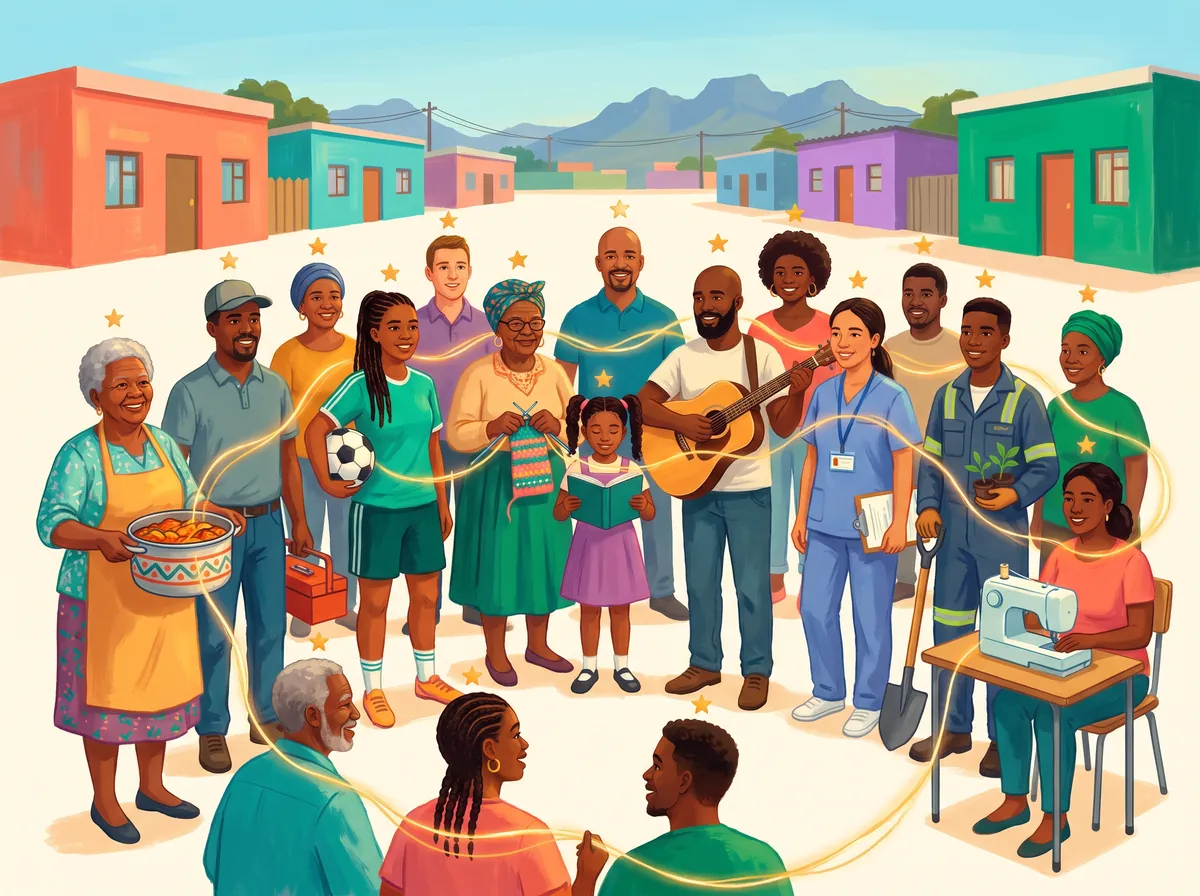
This booklet is not a promise of money, a project or a new service. It is a way of seeing what is already here, and of using it better.
Everyone has a gift
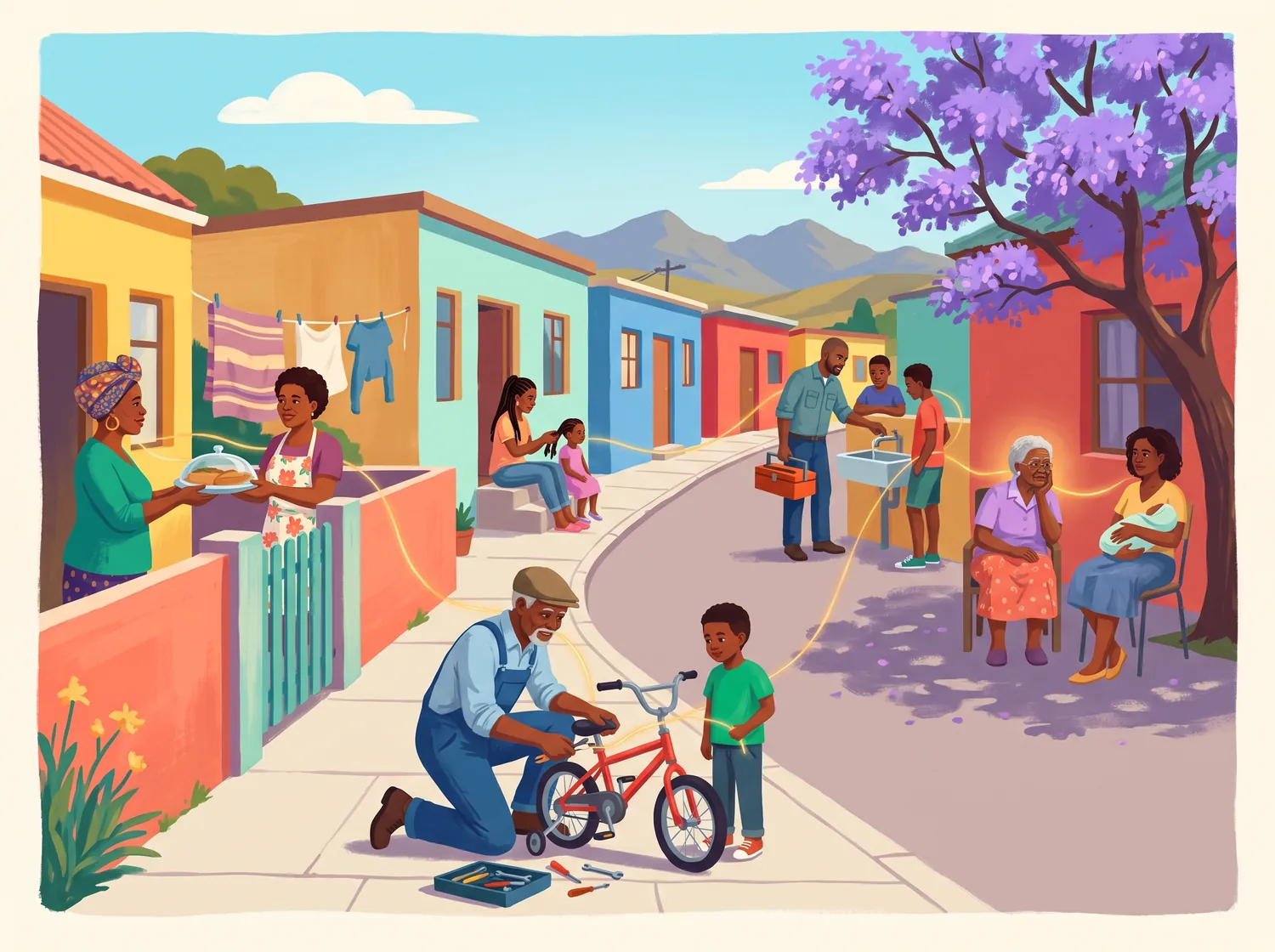
A gift is something you can do, something you know, or someone you know. The woman who cooks for a funeral. The man who fixes bicycles. The neighbour everyone phones first when there is trouble. The teenager who coaches the little ones on a Saturday morning.
None of this is written down anywhere. It does not appear in any report. It is what carries this community, and it is what we are looking for.
What am I good at? What group do I belong to? Who do I phone first when something goes wrong? Those three answers are your gifts.
Six kinds of gifts
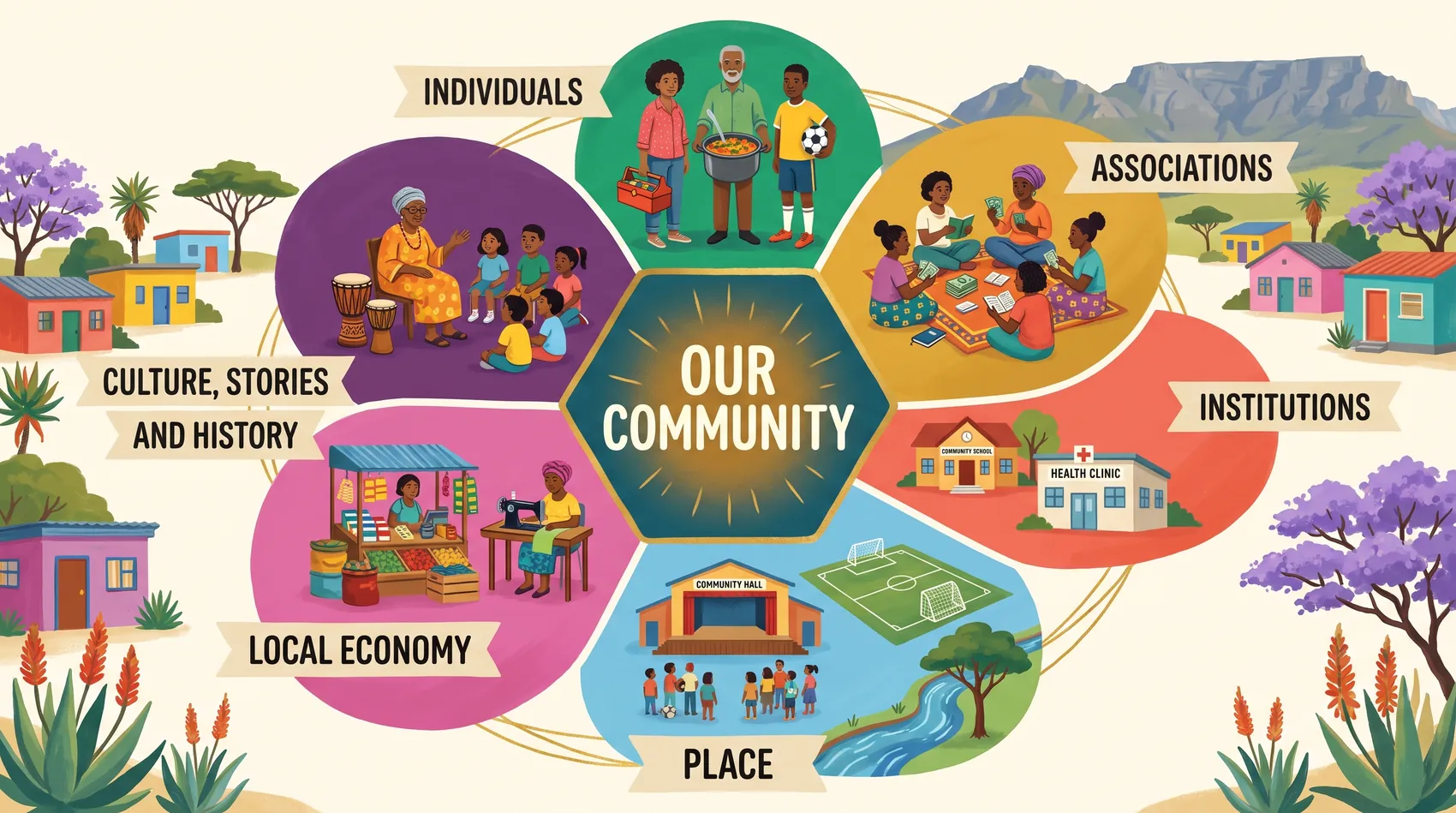
- People. What each of us can do, knows, or is willing to help with.
- Groups. The clubs, teams, churches, mosques, stokvels, watches and committees we belong to.
- Organisations. The school, the creche, the clinic, the library, the shops: their halls, their equipment, their know-how.
- Places and things. The hall, the field, the empty building, the land, the river, the shade under the tree.
- What we make and spend. The money that comes in and where it goes, the people who bake, sew, build, fix and sell.
- Our stories and history. What this place has come through, and what we learned from it.
Why do this if nothing is wrong?
Sometimes there is a clear problem: too many people getting sick, children missing out, nobody using the clinic until it is too late. Then the question is simple. Who here is already doing something about it, and what would help them do more?
But the best time to do this is when nothing is wrong.
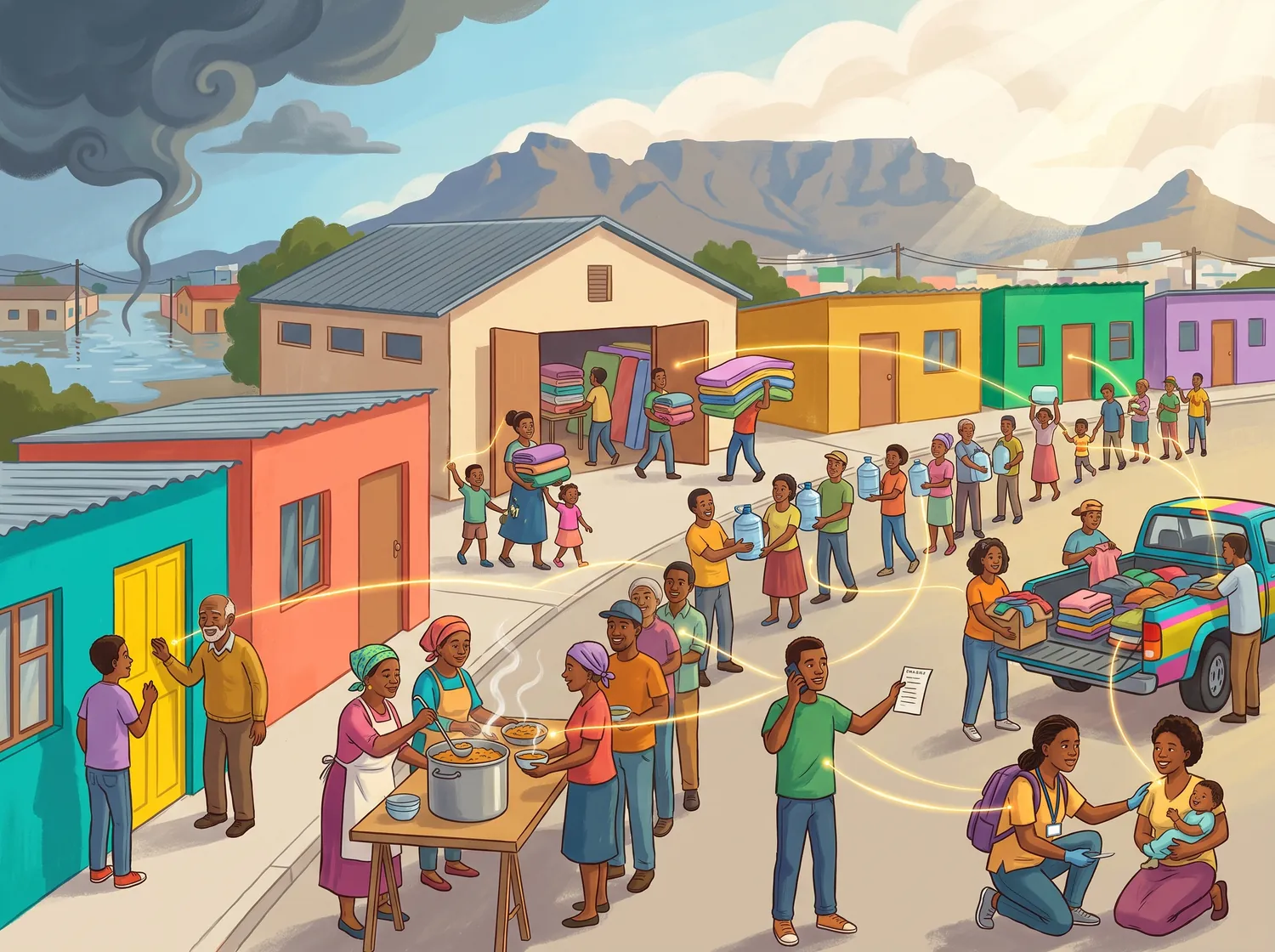
The hard things come to every community sooner or later. A fire. A flood. A drought. Weeks without water or electricity. A sickness that spreads. A factory that closes. When that day comes, what matters is who already knows who. Who has the keys to the hall. Who has the list. Who will go and check on the old man at number 14. Which group can cook for two hundred people by tomorrow. That cannot be built in a week. It is built now, while things are calm.
Telling our stories
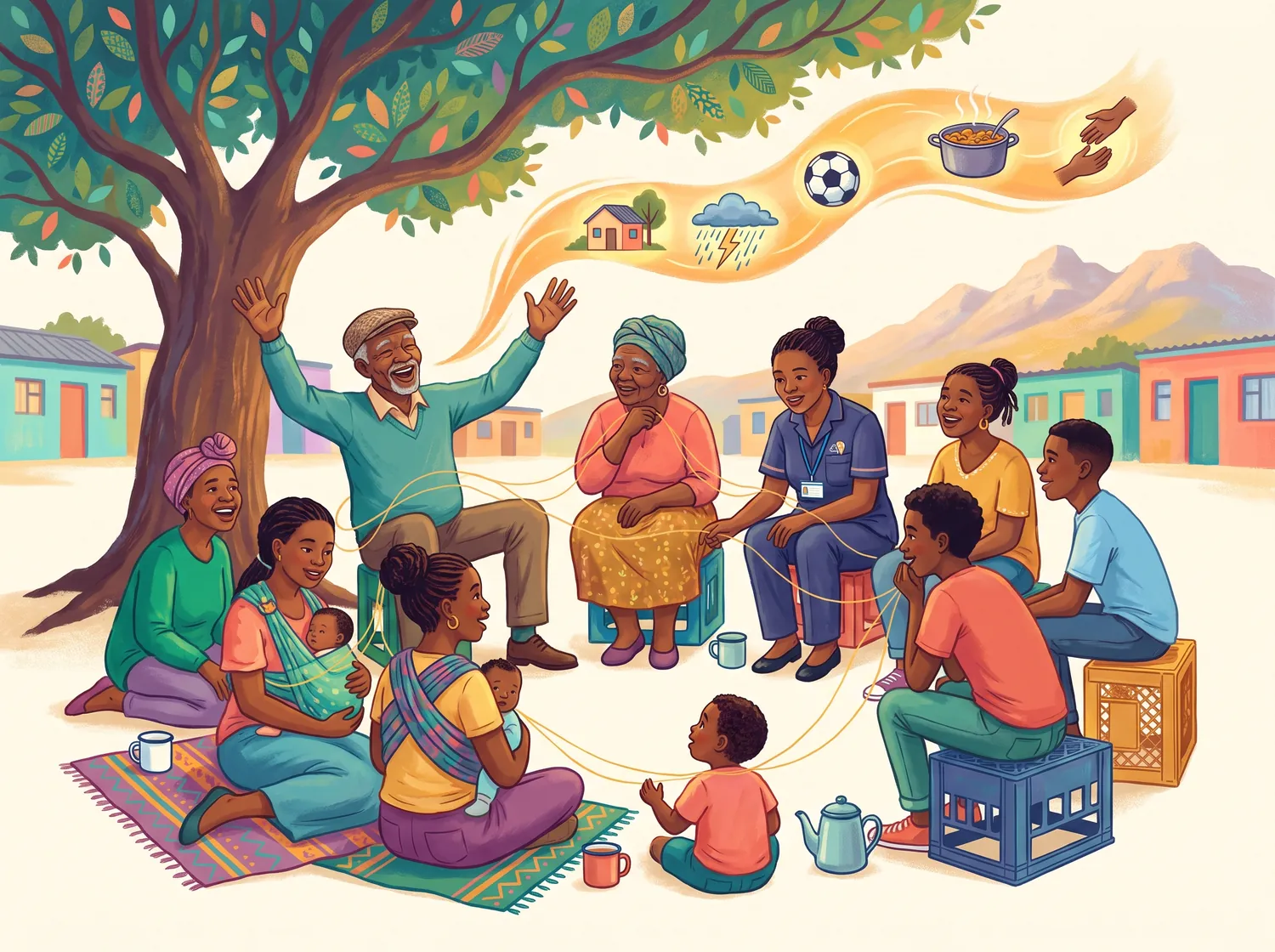
Our stories are where this starts. We sit in a circle, we drink tea, and people talk. There is no form to fill in.
Tell us about a time this community got through something hard. What happened, and who helped?
The people who helped are the gifts we are looking for. You can speak, or you can sit and listen. Both are welcome.
Our timeline
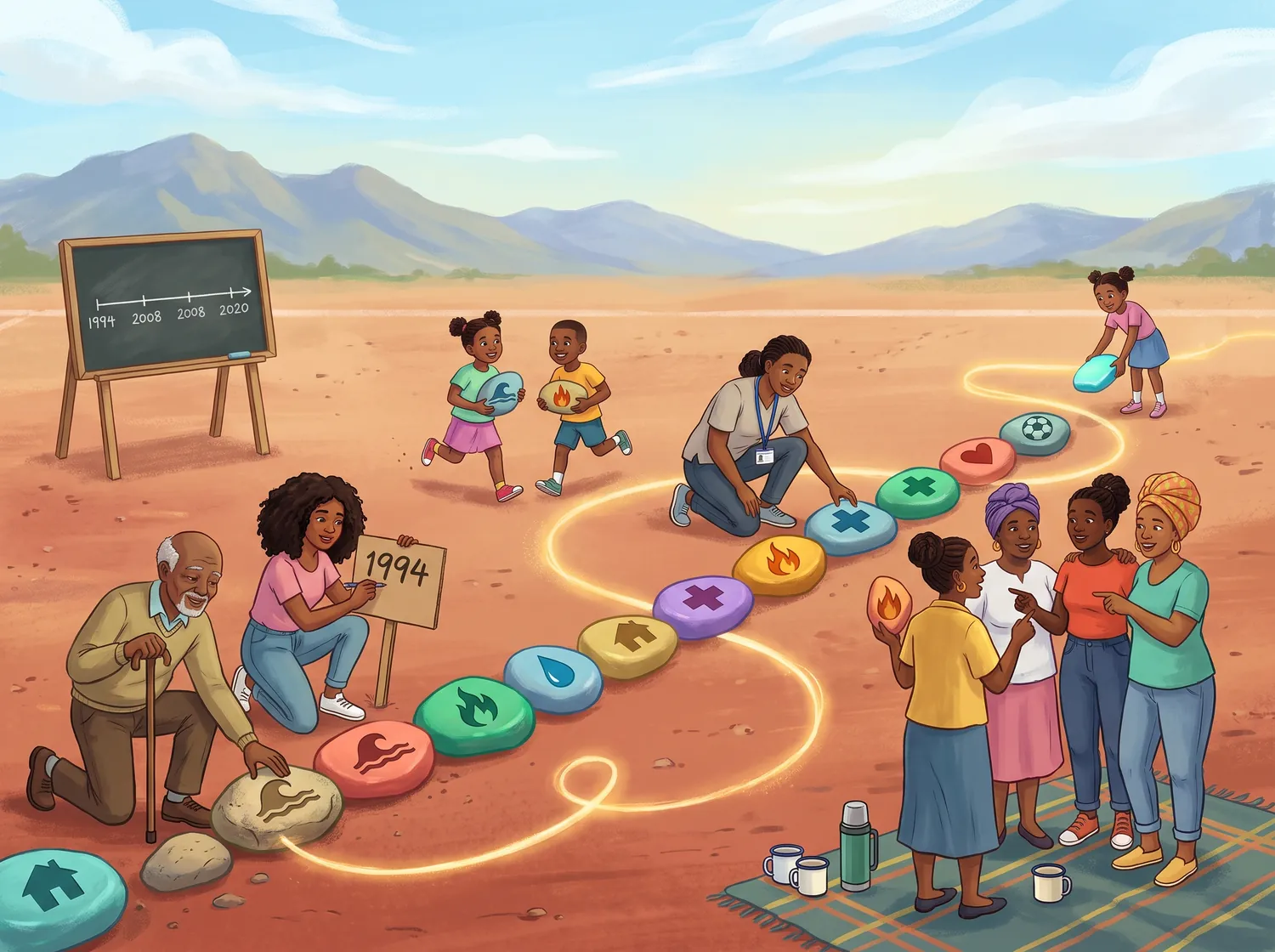
A timeline is a line with our history on it. We start with the oldest memory in the room and work forward. The flood. The fire. The year the school opened. The funeral that changed things.
For each one we ask the same question: what did people do, and who helped? It can be done on a blackboard, on a wall, or with stones laid along a line on the soccer field.
A timeline shows what this community has already come through. That is a strength nobody can take away.
Our map
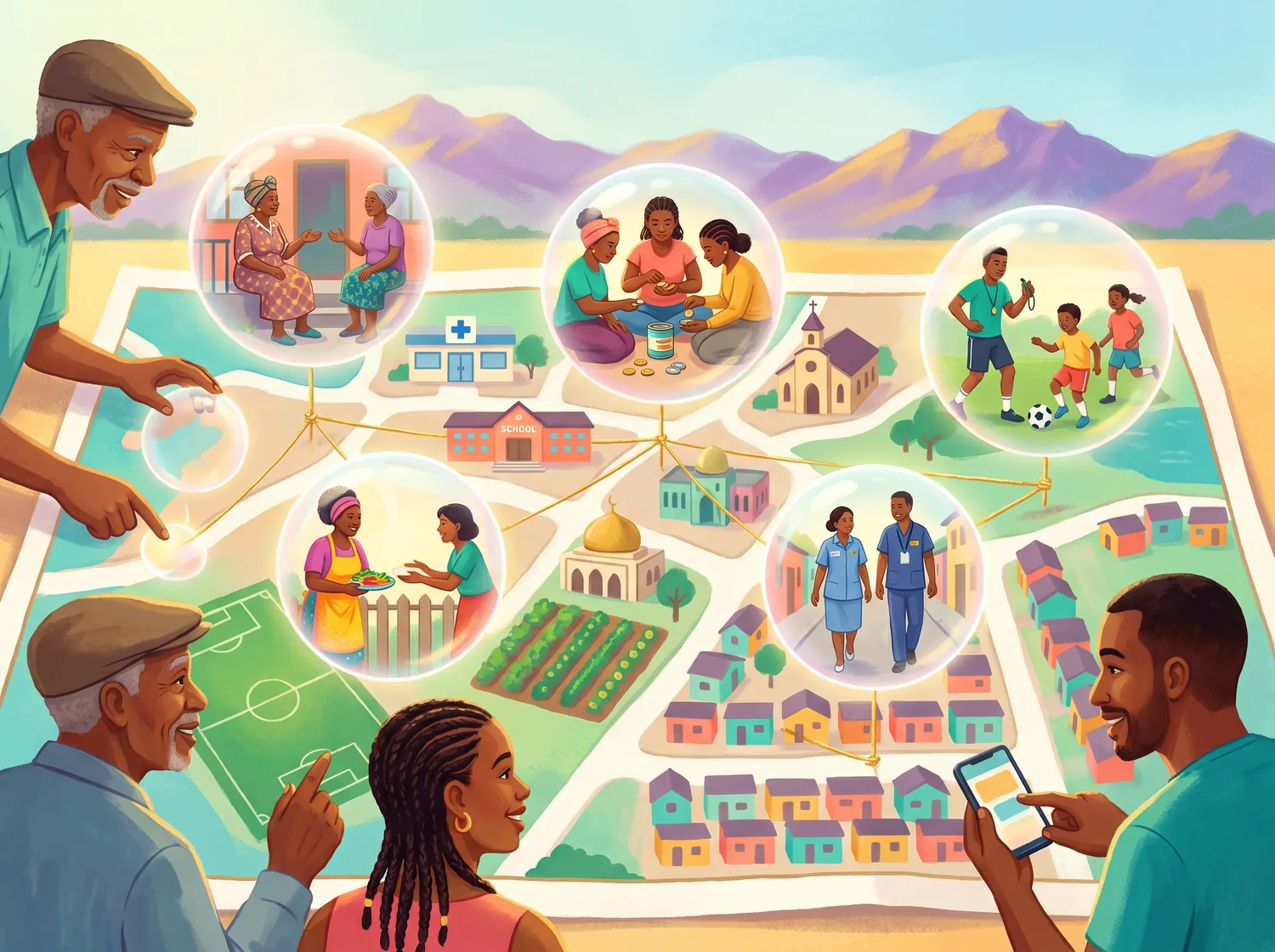
A map shows where things are. We draw our own: the houses, the hall, the clinic, the taps, the shops, the field, the places that feel safe and the places that do not.
Then we put our gifts on it. Who is where. What happens where.
The map belongs to this community. It stays here, with us. We can add to it, correct it and change it whenever we like.
Your story stays yours
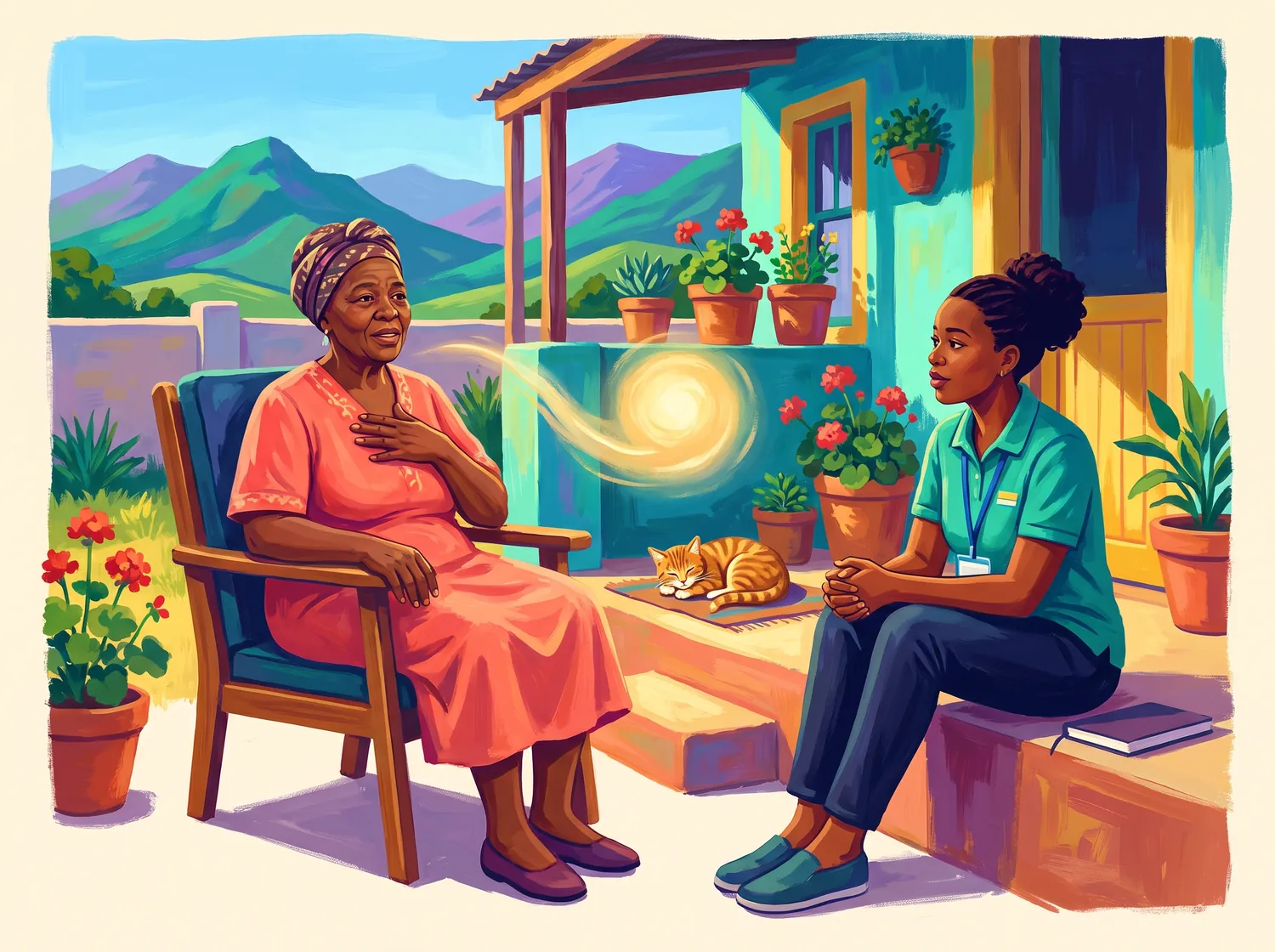
Nothing you say is written down unless you say we may.
We say before we start what is being written down, who will see it, and what it is for. Telling your story in a circle does not mean it can be put in a report, on a poster or on the radio. For that we must ask you again. You can change your mind later. If you ask us to take your story out, we take it out.
Your name, your phone number and anything about your health are protected by law. What we gather stays here, in this community. If we choose to share something with the clinic or the municipality, we share a copy, and we decide what goes.
Who calls the meeting?
We do.
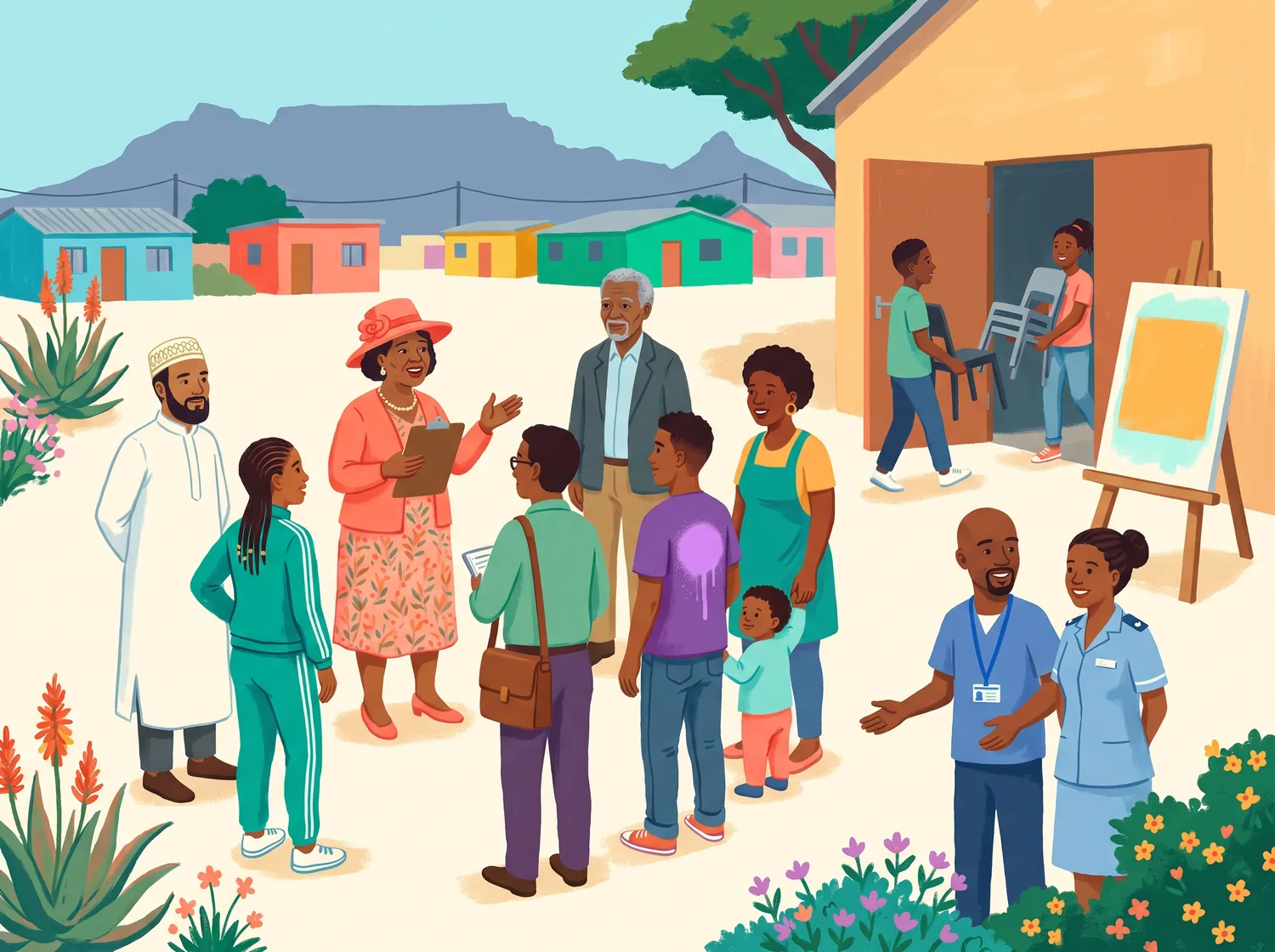
This works best when the people who already bring this community together are the ones who run it: the church and the mosque, the school, the creche, the ward committee, the sports club, the burial society, the savings group, the organisation that is already here.
The clinic team and the community health workers are welcome, and they have a lot to offer. They come as neighbours and partners, not as the owners of the meeting. When they move on, as officials do, this must still be standing.
Nobody is coming to do this for us, and nobody needs to.
What happens next
Finding the gifts is not the point. Using them is.
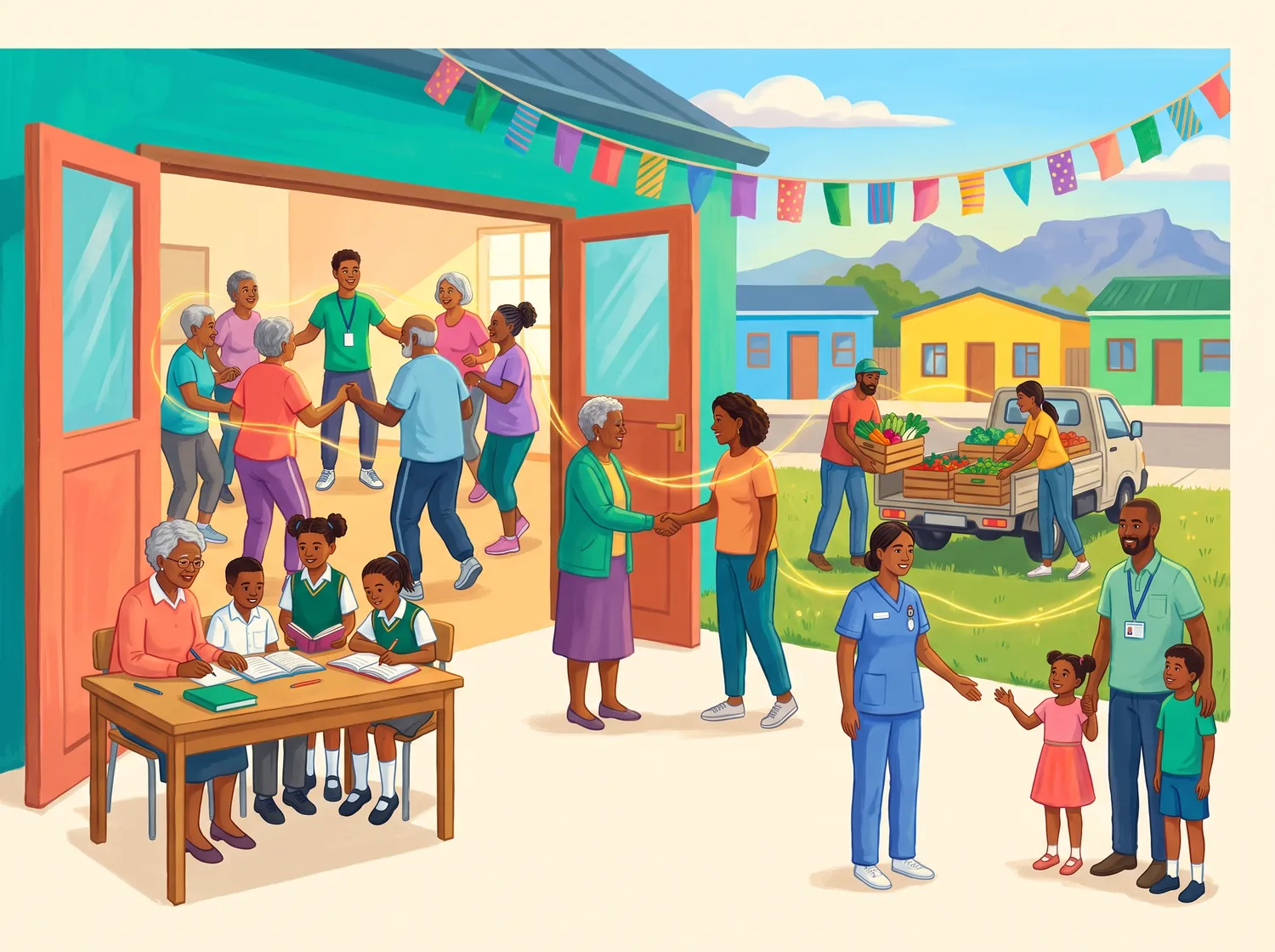
When the church hall stands empty on a Tuesday morning and the exercise group has nowhere to meet, we introduce them to each other. When a retired teacher has time and children need help with homework, we introduce them to each other.
Small things first, and soon. Every introduction is one more thing this community can do for itself. And where something is genuinely missing, we take that to the people whose job it is to provide it. Starting with our strengths lets nobody off the hook.
How to start
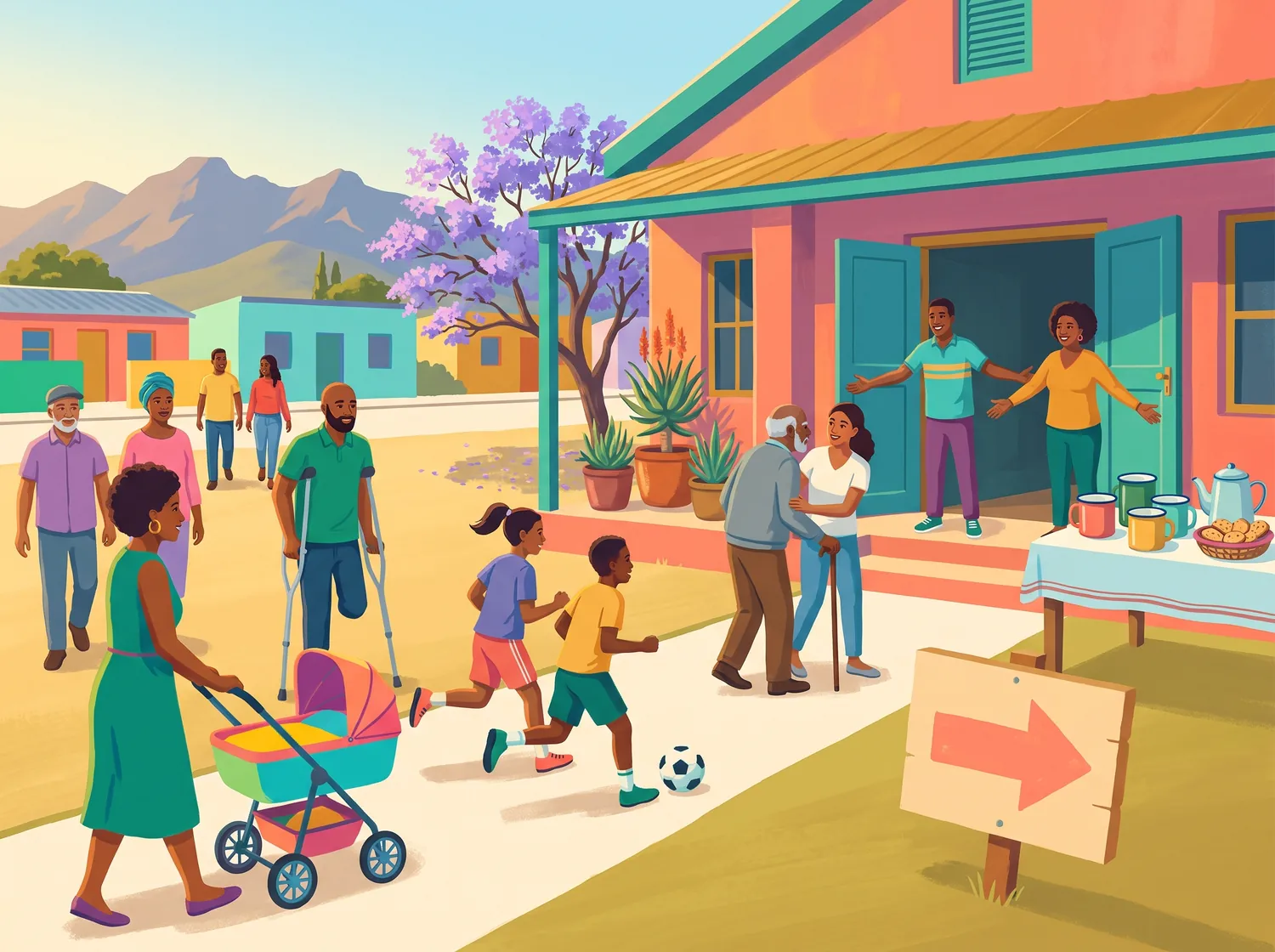
You do not need permission, a budget or a committee. You need a place to sit, a few chairs, something warm to drink, and somebody willing to write down what is said.
Invite the people who are already trusted here. Ten to twenty is plenty. Begin with one story. See who comes next time.
Place: __________________________
Date and time: ______________________
Who to ask: ________________________
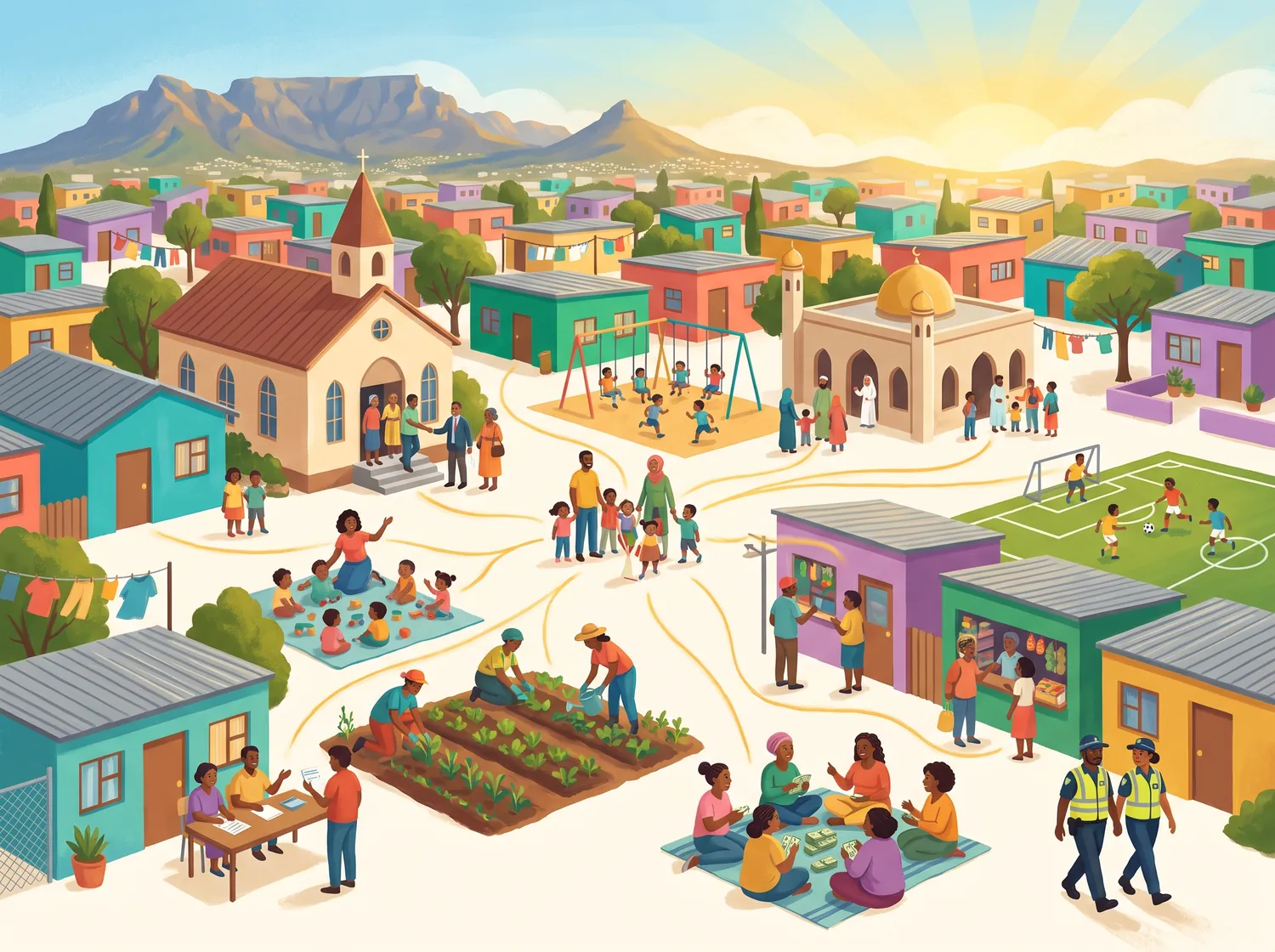
This community is not a list of problems to be solved. It is a place full of people with something to give.
This booklet is the community companion to the guide Starting with Strengths (second edition, 2026), written for the teams who work alongside communities. You may copy it, print it, translate it and change it to suit your community. English edition; isiXhosa and Afrikaans versions to follow.